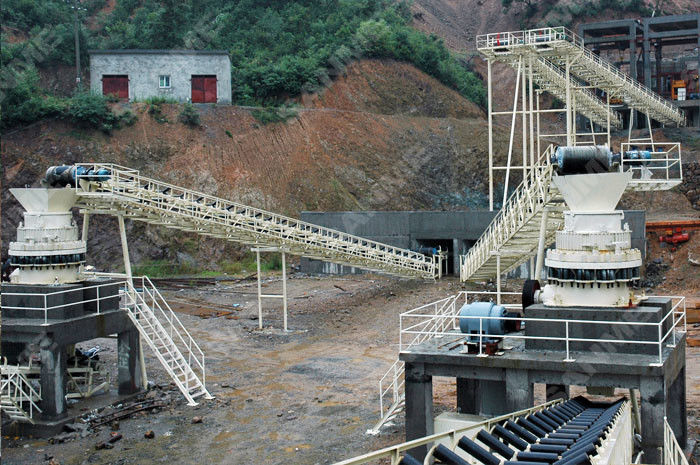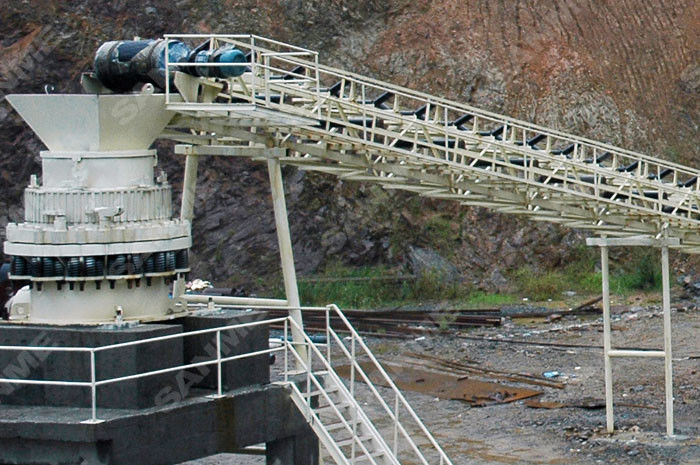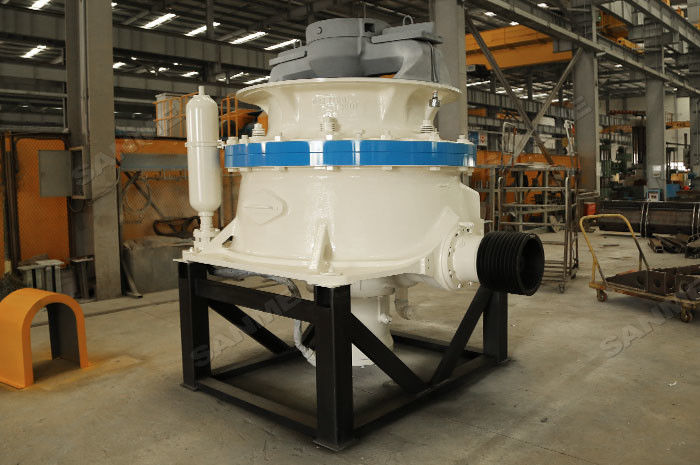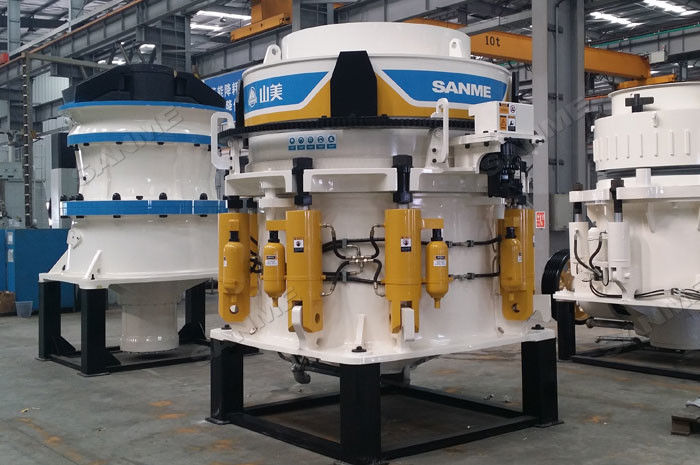
400Kw Metallurgy Feeding 460mm Cone Crusher Machine
2025-12-11
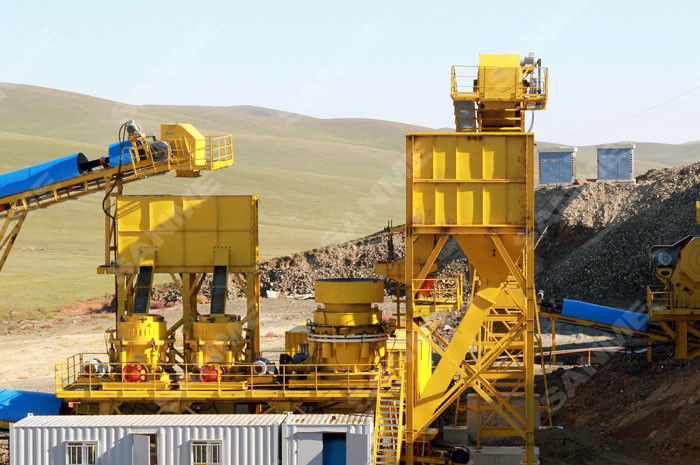
Designing a construction waste crushing production line requires comprehensive consideration of processing scale, raw material characteristics, site conditions, and environmental protection requirements. The following is a detailed design plan:
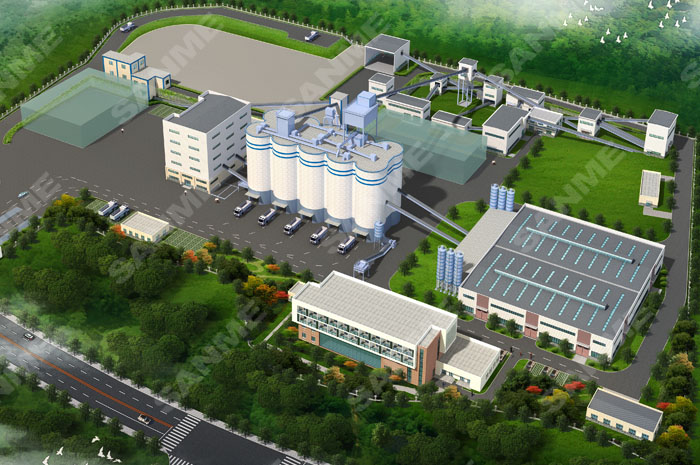
1、Production Line Scale and Layout
Processing Scale: The production line scale is determined based on the annual processing capacity. For example, a production line processing 2 million tons of construction waste annually requires equipment with corresponding capacity to meet production demands.
Site Layout:
Raw Material Area: Located in the north or upwind of the plant area for easy raw material access and storage, minimizing impact on other areas.
Production Area: Centrally located for crushing, screening, and other major equipment for easy management and maintenance.
Finished Product Area: Located in the center of the plant area or near the entrance/exit for easy finished product transportation and storage.
Office Area: Located in the south or downwind of the production area, near the main gate for convenient management of the entire plant’s normal operation.
2、Process Flow Design
Crushing Process:
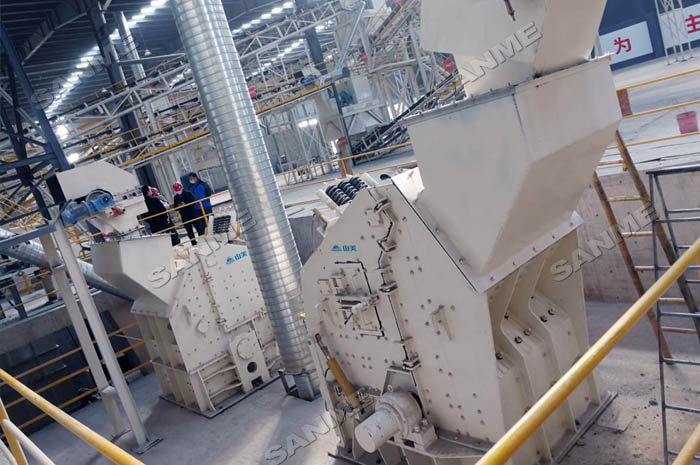
Coarse Crushing: A jaw crusher is used for initial crushing, breaking large pieces of construction waste into smaller particles.
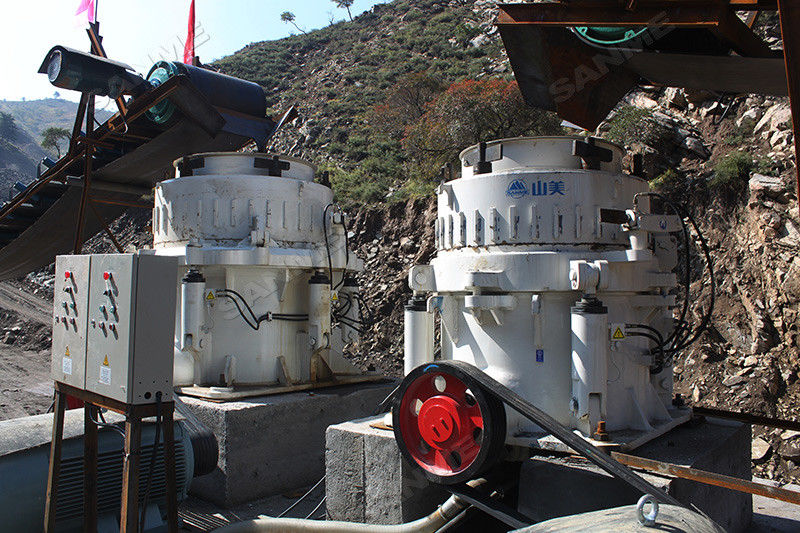
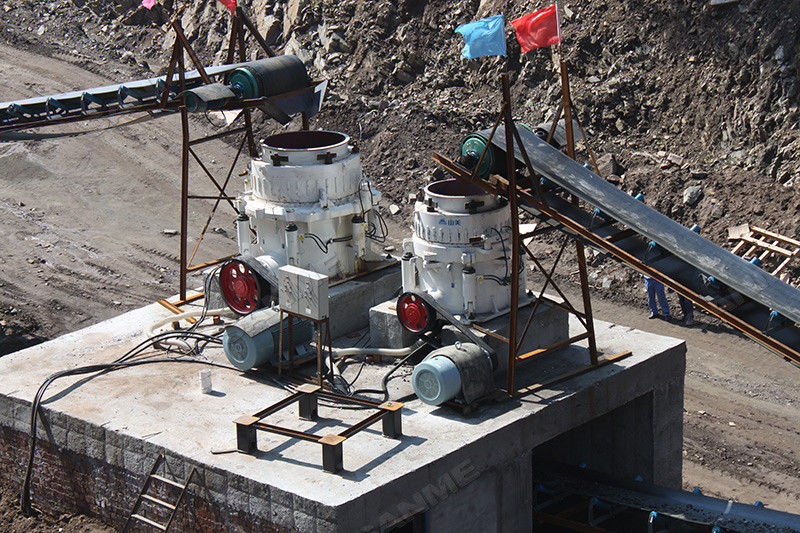
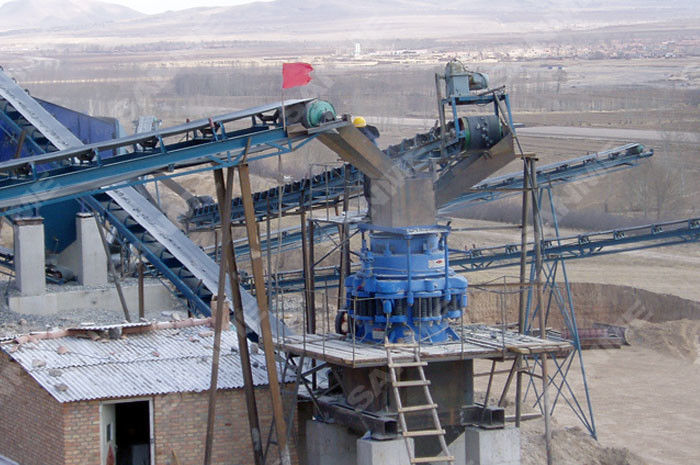
Medium and Fine Crushing: An impact crusher or cone crusher is used for further crushing to achieve the required particle size.
Multi-stage crushing: For materials requiring finer particle sizes, multi-stage crushing processes can be employed, such as a jaw crusher + impact crusher, or by adding a sand making machine for fine crushing.
Screening processes:
Vibrating screen: A vibrating screen is used to screen the crushed material, separating recycled aggregates of different particle sizes.
Drum screen or star screen: Select appropriate screening equipment based on material characteristics to improve screening efficiency and accuracy.
Separation processes:
Magnetic separation: Magnetic separators are used to separate metallic impurities, improving the purity of recycled aggregates.
Air separation: Air separators are used to separate light impurities, such as plastics and wood, further purifying the recycled aggregates.
Manual collection: Manual collection stations are set up at key stages to carefully inspect and clean materials, ensuring the quality of the finished product.
3、Equipment Selection and Configuration
Crushing equipment:
Stationary crushing equipment: Suitable for long-term, large-scale processing projects, with high processing capacity and stable operation.
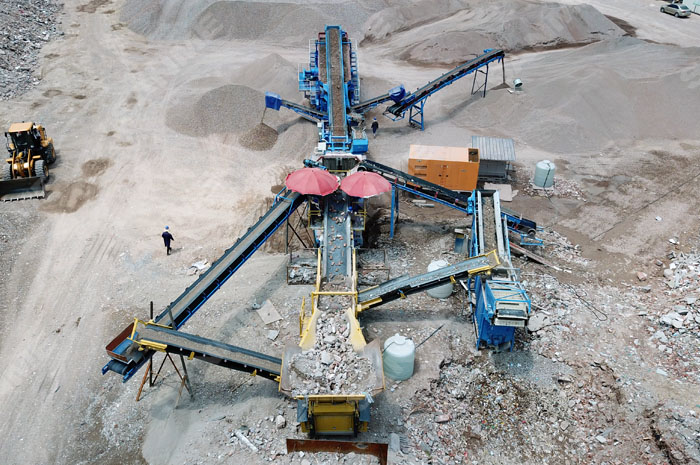
Mobile crushing equipment: Suitable for projects with relatively small processing volumes, dispersed locations, and frequent relocation requirements, offering high flexibility and rapid deployment.
Screening Equipment:
Vibrating Screen: Suitable for most construction waste screening needs, offering high screening efficiency and easy maintenance.
Drum Screen or Star Screen: Select appropriate screening equipment based on material characteristics to improve screening accuracy and efficiency.
Sorting Equipment:
Magnetic Separator: Select a strong magnetic separator to ensure effective separation of metallic impurities.
Air Separator: Select a suitable air separator based on material specific gravity and wind characteristics to achieve effective separation of light impurities.
Conveying Equipment:
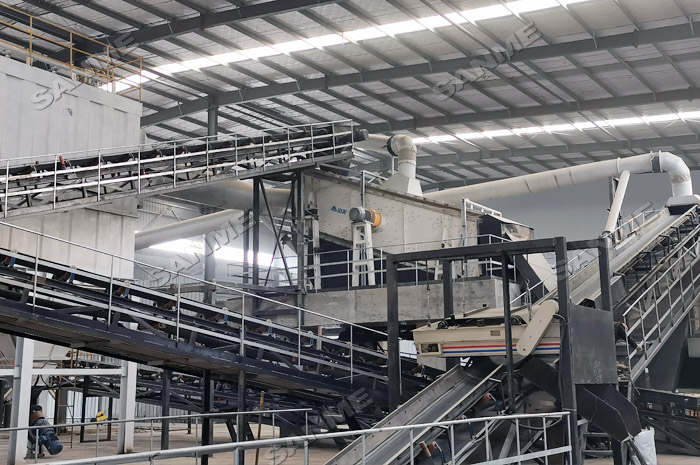
Belt Conveyor: Connects the entire production line for continuous material transport.
Elevator: Used when material needs to be lifted, such as transporting finished aggregates to the finished product silo.
4、Environmental Protection and Intelligent Design
Environmental Protection Design:
Dust Removal System: Install dust collectors in key stages such as crushing and screening to reduce dust pollution.
Noise Reduction System: Employ sound insulation materials and noise reduction equipment to reduce noise pollution.
Wastewater Treatment: Install a wastewater treatment system to treat and reuse wastewater generated during production.
Intelligent Design:
Intelligent Central Control System: Enables intelligent management and control throughout the entire process, from equipment start-up and shutdown, parameter adjustment to fault early warning, improving production efficiency and safety.
Remote Monitoring System: Monitors the production line’s operating status in real time through a remote monitoring system, promptly identifying and resolving problems.
5、Case Study
Taking a 2 million-ton-per-year construction waste recycling production line as an example:
Production Line Layout: The raw material area, production area, finished product area, and office area are rationally laid out for easy management and transportation.
Process Flow: Employs a two-stage crushing process (jaw crusher + impact crusher) and a single screening process to separate recycled aggregates into coarse, medium, and fine aggregates. Quality is further improved through water washing and lightweight material separation facilities.
Equipment Configuration: Utilizes key equipment such as stationary crushing equipment, vibrating screens, magnetic separators, and air separators to ensure production efficiency and finished product quality.
Environmental Protection and Intelligentization: Equipped with environmental protection facilities such as dust collectors, noise reduction systems, and wastewater treatment systems, and employs an intelligent central control system to achieve intelligent management and control throughout the entire process.
| Shanghai Sanme Mining Machinery Corp., Ltd |
| No.258, Fengcun Road, Qingcun County, Fengxian District, Shanghai, China |
| 86-021-3759-5660 |
| sanme@sanmecrusher.com |