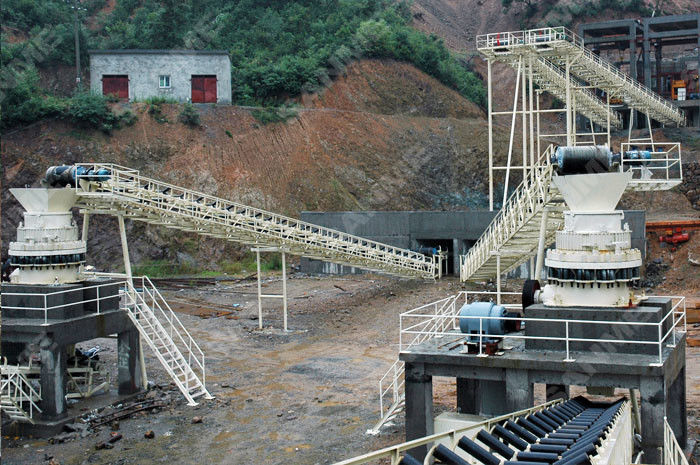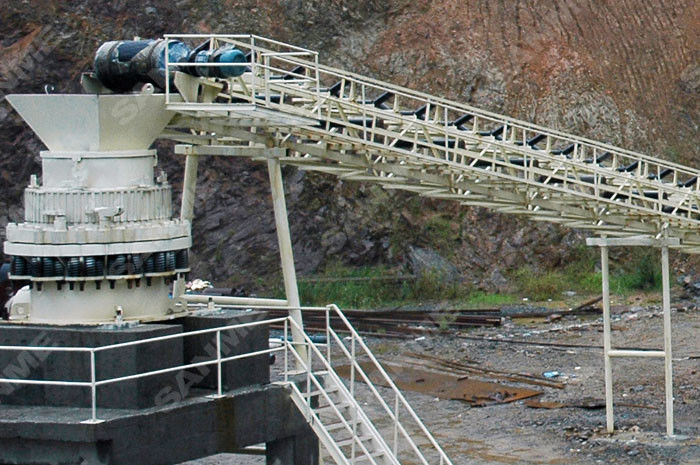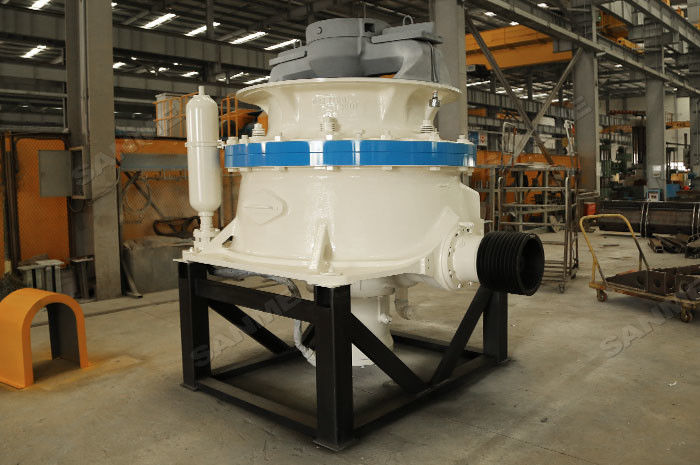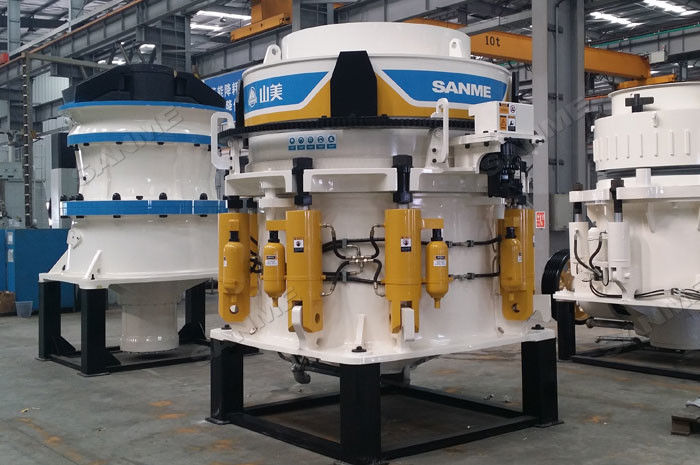
400Kw Metallurgy Feeding 460mm Cone Crusher Machine
2025-12-4
The specific processing steps in a metal ore production line include several key steps that are closely linked and work together to transform ore into concentrate. The following is a detailed introduction to the specific processing steps in a metal ore production line:
1、Ore Preparation Stage
Ore Mining
Open-pit Mining: Suitable for metal ores with shallow ore bodies. After stripping the overburden, the ore is extracted using methods such as blasting and excavation.
Underground Mining: For metal ores with deeper ore bodies. The ore is extracted using tunneling and mining methods (such as open-cut mining and backfilling).
Ore Transportation
The extracted ore is transported to a concentrator or crushing station using trucks, belt conveyors, and other transportation tools.
2、Crushing and Screening Stage
Primary Crushing
Equipment: Jaw crushers are typically used for primary crushing, breaking large pieces of ore into particle sizes suitable for subsequent processing (e.g., 150-300mm).
Purpose: To reduce ore particle size, facilitating subsequent medium and fine crushing operations.
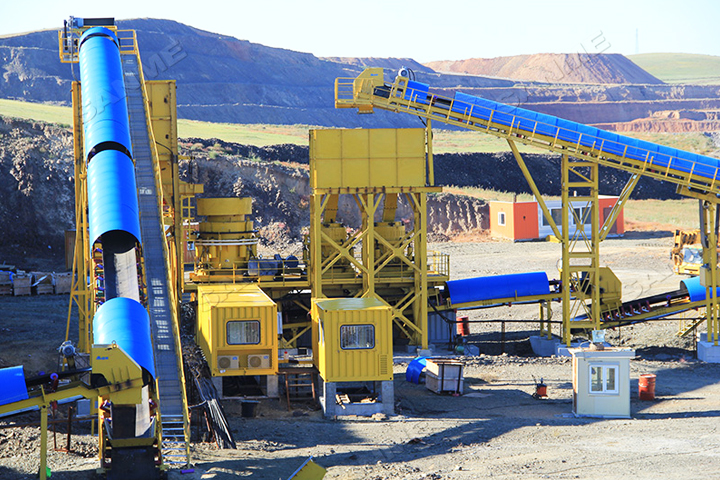
Medium Crushing
Equipment: Cone crushers or impact crushers are used for medium crushing to further break the coarsely crushed ore into smaller particle sizes (e.g., 50-100mm).
Fine Crushing
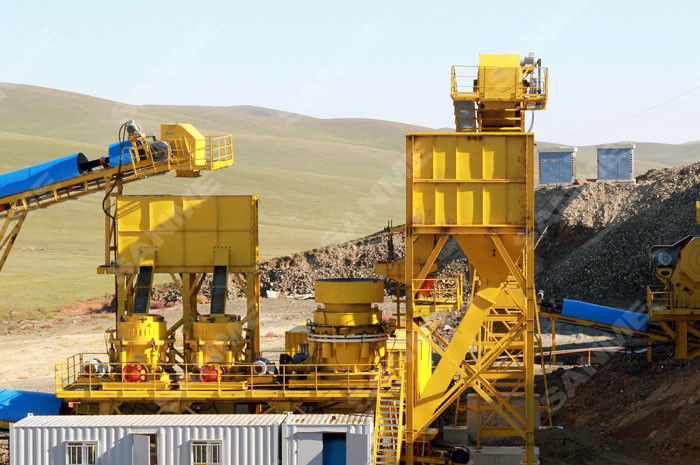
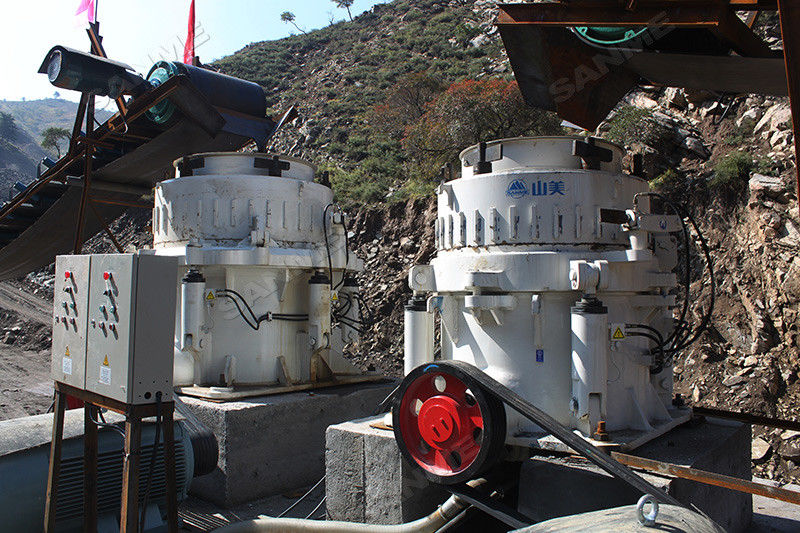
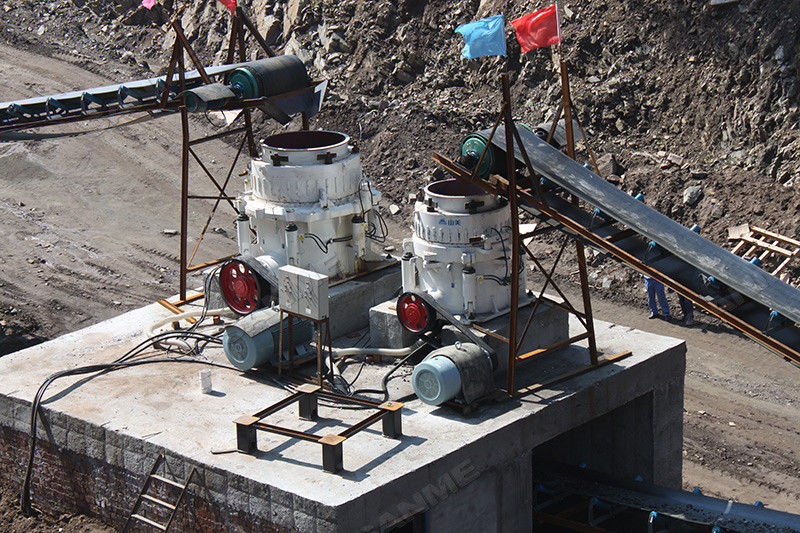
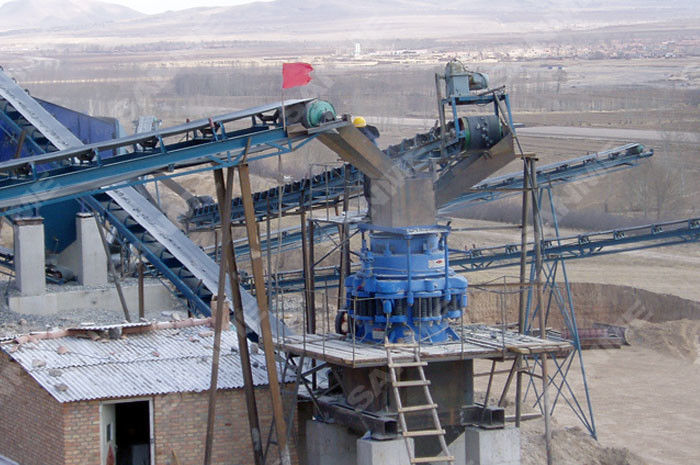
Equipment: Depending on the ore properties and product requirements, multi-cylinder hydraulic cone crushers, impact crushers, or high-pressure roller mills may be used for fine crushing to break the ore to or close to the individual liberated particle size (e.g., 10-30mm).
Screening
Equipment: Vibrating screens are used to screen the crushed ore, separating ore into different particle sizes.
Purpose: To ensure uniform particle size of the ore entering subsequent grinding operations, improving grinding efficiency; and to screen out ore of qualified particle size, reducing over-grinding.
3、 Grinding and Classification Stage
Grinding
Equipment: Ball mills or rod mills are typically used for grinding to grind the ore to the individual liberated particle size or finer.
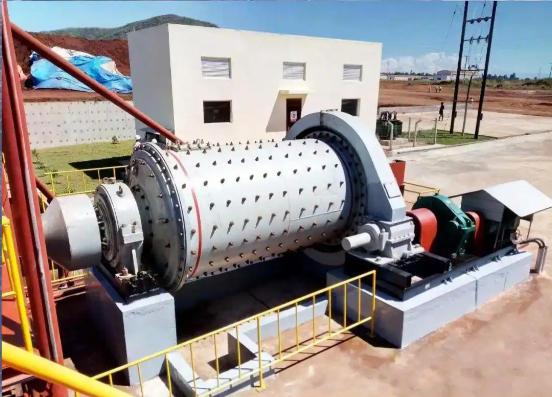
Purpose: To fully liberate the valuable minerals and gangue minerals in the ore, creating conditions for subsequent beneficiation operations.
Classification
Equipment: Spiral classifiers or hydrocyclones are used for classification.
Purpose: To separate mineral slurry into products of different particle sizes based on the different settling rates of mineral particles in the liquid. Slurry that does not meet the requirements is returned to the ball mill for further grinding, forming a closed-loop circulation and improving grinding efficiency.
4、Beneficiation Stages
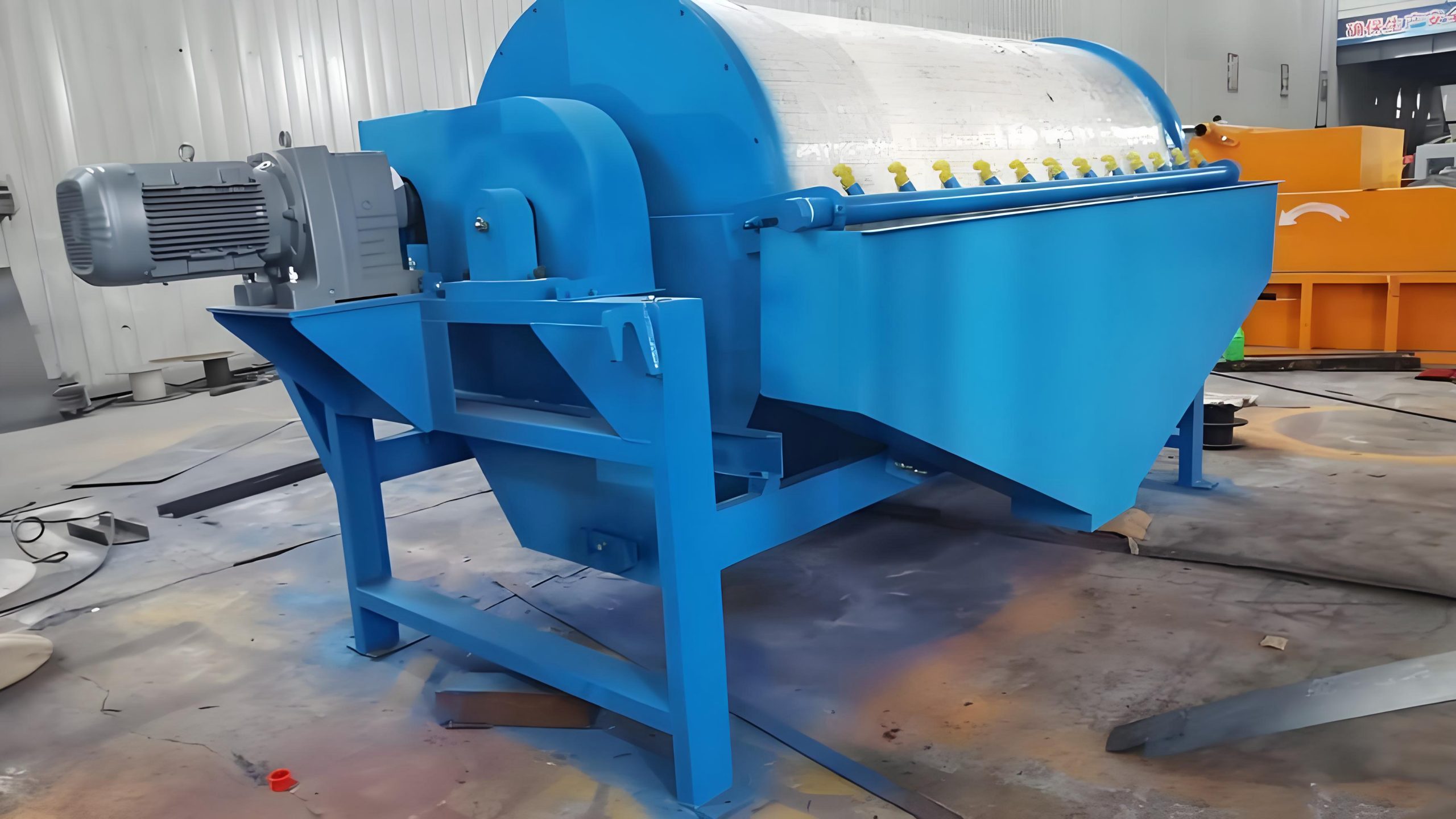
Magnetic Separation
Applicable to: Magnetic minerals (such as iron ore, manganese ore, etc.).
Principle: Utilizing the difference in magnetic properties of minerals for separation, magnetic minerals adhere to the magnetic system of the magnetic separator, thereby achieving separation from gangue.
Flotation
Applicable to: Recovery of fine-grained associated metals such as gold, copper, lead, and zinc.
Principle: By adding flotation reagents, the surface of the useful minerals becomes hydrophobic and adheres to air bubbles, forming a frothy product, thus separating from the gangue. The flotation process may include multiple stages such as roughing, cleaning, and scavenging.
Gravity Separation
Applicable to: Recovery of coarse-grained free gold and separation of minerals with large density differences.
Principle: Separation is achieved based on differences in mineral density, under the influence of gravity, centrifugal force, etc.
Other Separation Methods
Cyanide Method: Suitable for fine-grained gold ores with high gold content inclusions. Cyanide reacts with gold to form a soluble gold-cyanide complex, which is then extracted from the solution through activated carbon adsorption or zinc powder replacement.
Cyanide-Free Gold Extraction Processes: Such as thiourea gold extraction and thiosulfate gold extraction, these processes offer environmental advantages but are more expensive and are currently mainly used for processing high-value-added gold ores.
5、Product Processing Stages
Dehydration
Equipment: Thickeners, filters, and other equipment are used to dehydrate the beneficiated concentrate.
Purpose: To reduce the moisture content of the concentrate for easier subsequent transportation and storage.
Drying
Equipment: For concentrates requiring further moisture reduction, dryers can be used.
Purpose: To obtain the final concentrate product to meet customer needs.
Tailings Treatment
Tailings Concentration: Thickeners are used for preliminary concentration to reduce tailings volume.
Tailings filtration: A filter further reduces the moisture content of the tailings, facilitating their storage or comprehensive utilization.
Comprehensive utilization of tailings: Depending on their properties, tailings can be used to produce building aggregates, underground backfill materials, etc., achieving resource utilization.
| Shanghai Sanme Mining Machinery Corp., Ltd |
| No.258, Fengcun Road, Qingcun County, Fengxian District, Shanghai, China |
| 86-021-3759-5660 |
| sanme@sanmecrusher.com |